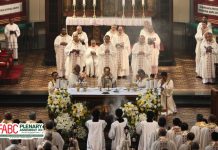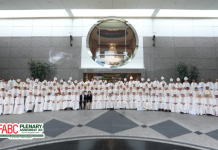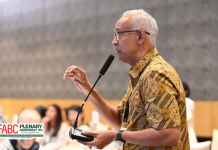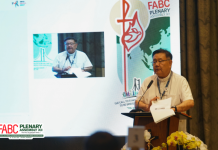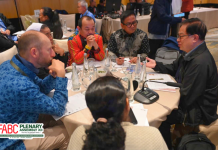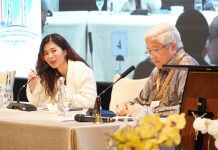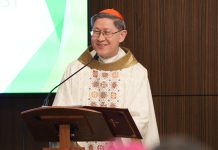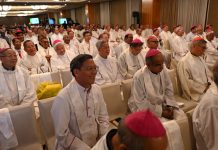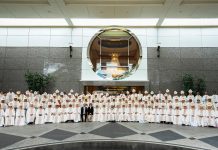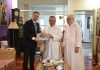




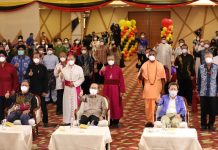

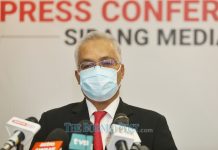

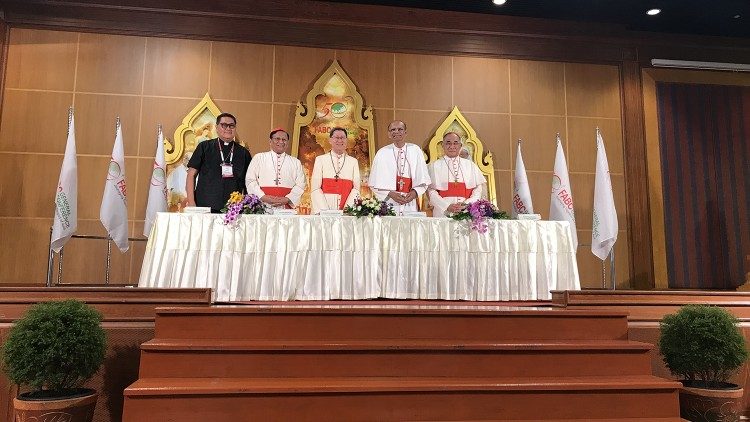
The concluding FABC press conference featured the 3 Cardinal Presidents and Cardinal Luis Antonio Tagle, all of whom are optimistic that the General Conference is a way forward for the Church in Asia.
By Sr Bernadette Mary Reis, fsp
BANGKOK, THAILAND — Bishop Mylo Hubert Vergara, Bishop of Pasig, Chairman of the Commission of Communication, moderated the second and final press conference of the FABC 50 General Conference which took place on Saturday afternoon at Michael Hall of the Baan Phu Waan Pastoral Training Centre near Bangkok.
After two and half weeks, he expressed the hope that the panelists would share what has been happening. One of the reasons Bishop Vergara said gave this press conference a special feature is that Cardinal Charles Bo, President of the FABC, is celebrating his birthday. And the second reason is the presence of Pope Francis’s special envoy to the FABC 50 Conference, Cardinal Luis Antonio Tagle, from the Dicastery for Evangelization.
Pope eager to listen
Cardinal Luis Antonio Tagle, Special envoy of the Holy Father, explained that the Pope sends a special envoy to all conferences such as the FABC General Conference. Cardinal Tagle recounted that when he received the call from the Pope asking him to represent him at the conference, the Pope said:
“Luis, convey my closeness…my being close to the churches in Asia.”
Cardinal Tagle hopes to bring some of the fruits of the conference back to the Pope whom he knows is eager to “listen to the Churches” in Asia.
Highlights of FABC 50 General Conference
Cardinal Francis Xavier Kriengsak, Archbishop of Bangkok extended his thanks to all of those who participated in the FABC Conference – because the Baan Phu Waan Pastoral Training Centre was filled with “communion, collaboration and commitment to reach the objective of the conference”, he said.
Cardinal Charles Bo, Archbishop of Yangon, then welcomed the members of the press participating in the press conference, and thanked them for their coverage. Then he provided a short summary of the final message to be released tomorrow. He concluded by thanking all who made the General Conference possible, including the government of Thailand, the Catholic Bishops’ Conference of Thailand, Cardinal Kriengsak and th Archdiocese of Bangkok, for “making this conference a valuable experience for the Church [in] and for the world”.
Final document
Cardinal Oswald Gracias, Archbishop of Bombay, described the Final Document the conference has been working on as a “futuristic” document regarding pastoral possibilities. He explained that conference delegates heard the cry of many facets of society in Asia. For example, he said, “we heard the great yearning for a greater contemplative spirituality in our pastoral work”. The document, he explained, is a work in progress which has received general approval by FABC delegates. It will be discussed further with other bishops, as well as members of the laity.
“We hope this document will remain with us as a guide document for future pastoral activities in the whole of Asia.”
“We wanted to see how our Churches can be agents of change”, Cardinal Gracias continued, stressing the desire that emerged that the Church be on the forefront of peace building and constructive dialogue in Asia.
Shift has taken place
One of the questions raised by the press concerned dialogue and the range of dialogue conference delegates have expressed. Gracias said that dialogue has always been a priority. But now, it has emerged as a “necessity not an option”, he continued. “The Asian Church can make a contribution to the entire Church regarding how effective dialogue can be carried out”, he said. He gave an example regarding a shift in language that took place in the Conference from the use of “other religions” to “neighbouring” religions, which shows a change in mentality in how FABC delegates perceive dialogue.
Minority seeking to influence the majority
Cardinal Tagle responded to a question regarding the reality that Catholics are a tiny minority in Asia and yet there is the desire to influence both the region, and the world at large. The use of the word minority can apply to the Christians in Asia in terms of quantity, he explained. This applies within the institutional Church as well, he said, providing the example that out of the 300,000 students in Catholic schools in Thailand, only a small percentage are Catholic. Then he made the distinction of the “qualitative” understanding of a minority, when put into context the Biblical tradition. “The parables of the kingdom always focus on how God acts through the little ones or what we would consider the minority, So, being a numerical minority does not impede the Church in Asia from believing that [however] numerically small it might be, that’s how the kingdom is promoted”. In the Philippines and East Timor, he reminded those present, Catholics are the majority. But this does not exempt those two countries from following the “path of the minority – humility, self-emptying, compassion, solidarity with the little ones of society”. Embracing this vocation as a minority can lead to the discover of the “potentials for being the bearers of the Kingdom of God”.
Use of social media by the Church
Regarding the use of social media within the ecclesial context, Cardinal Tagle explained that the Church’s life is based on the Sacraments, and on physical signs that “speak of a deeper reality”. Therefore, this sacramental structure of the Church leads the Church back to a pre-pandemic experience since the crisis that led the Church to move it worship online is over. However, the Cardinal said, the Church can learn from other ways that members of the Church began to use social media to reach out to others – catechetical and counselling sessions, for example. He foresees that the Church can provide formation to those who can offer some types of ministry online.
Appeals to end conflicts
Fielding another question regarding the reality of the war in Ukraine, Cardinal Tagle recognized a consistent appeal for a concerted effort toward resolving that conflict and others. “The Church, even the Holy Father, cannot compel people to talk”, he stated. “It depends on those who are supposed to talk, whether they will listen”. Cardinal Gracias then expressed concern about the rise of violence and extremism. This requires that people in the Church work for peace and reconciliation, a point, he said, that came up several times in the conference. “We have to take up a greater role in society to work for a peace that succeeds”, Cardinal Gracias said. Cardinal Bo, too, contributed on this issue. “What is impossible for man,” he said, makes us rely on the “power above us” so that “when the time comes, peace and dialogue will be possible in the country”. Cardinal Kriengsak reminded those present of Pope Francis’s action who bent down to the ground and kissed the feet of leaders who had previously been involved in conflice in South Sudan on their visit to the Vatican in April 2019.